In the late 19th century, a number of painters were fascinated by the active volcanoes of the Hawaiian islands. These became so popular as subjects that the artists were collectively dubbed the “Volcano School.”
Several of these are in the collection of the museum at the Hawaiʻi Volcanoes National Park:
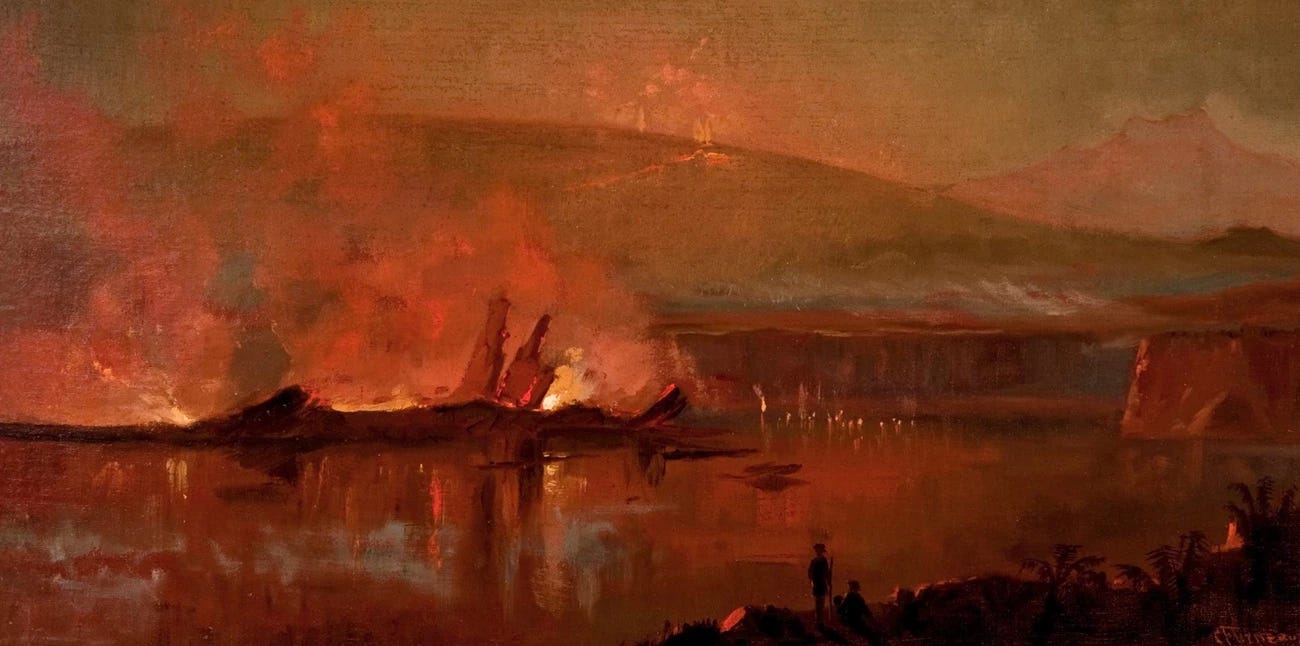
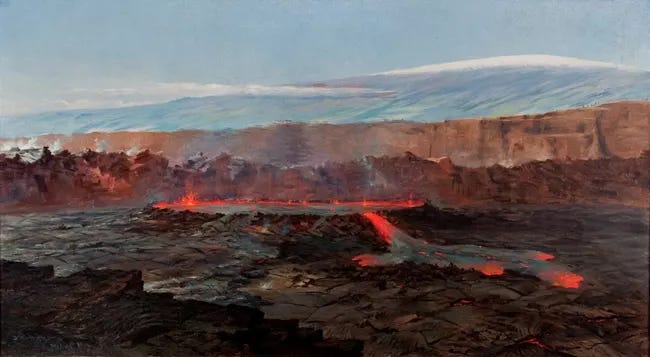
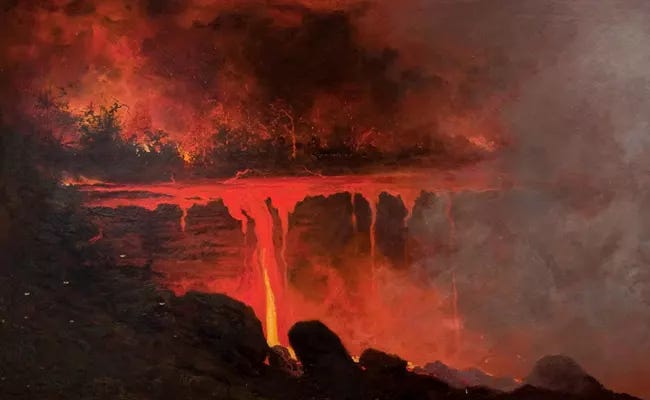
The painters brought familiarity with European and American art to the islands. David Howard Hitchcock of Hilo, Hawaii, graduated from Oberlin College and studied at the National Academy of Design in New York and the Académie Julian in Paris. Charles Furneaux of Massachusetts moved to Hawaii at the age of 45. Jules Tavernier, born in Paris, made his way to the islands via London and San Francisco.
As volcanoes go, Europeans were most familiar with Vesuvius, although Turner had also painted a Caribbean volcano from someone else’s sketches.
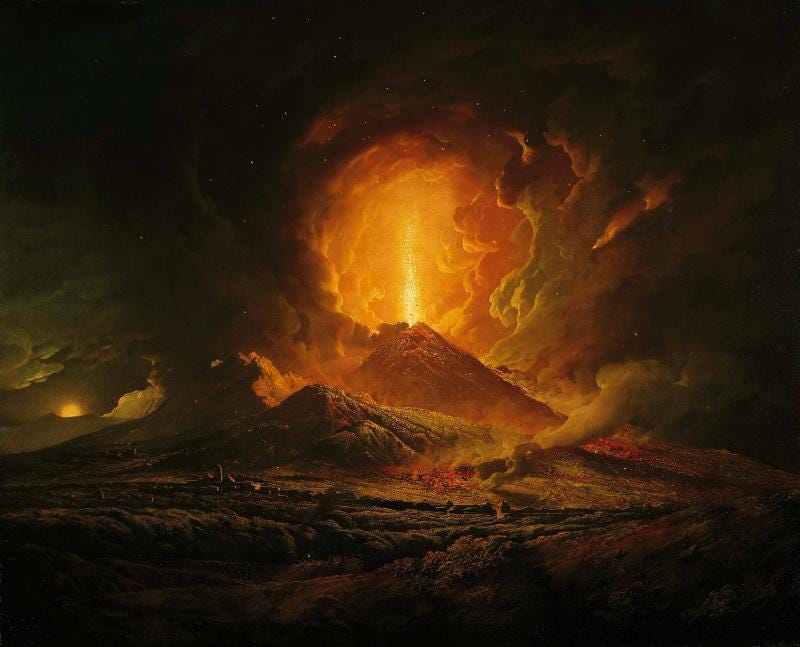
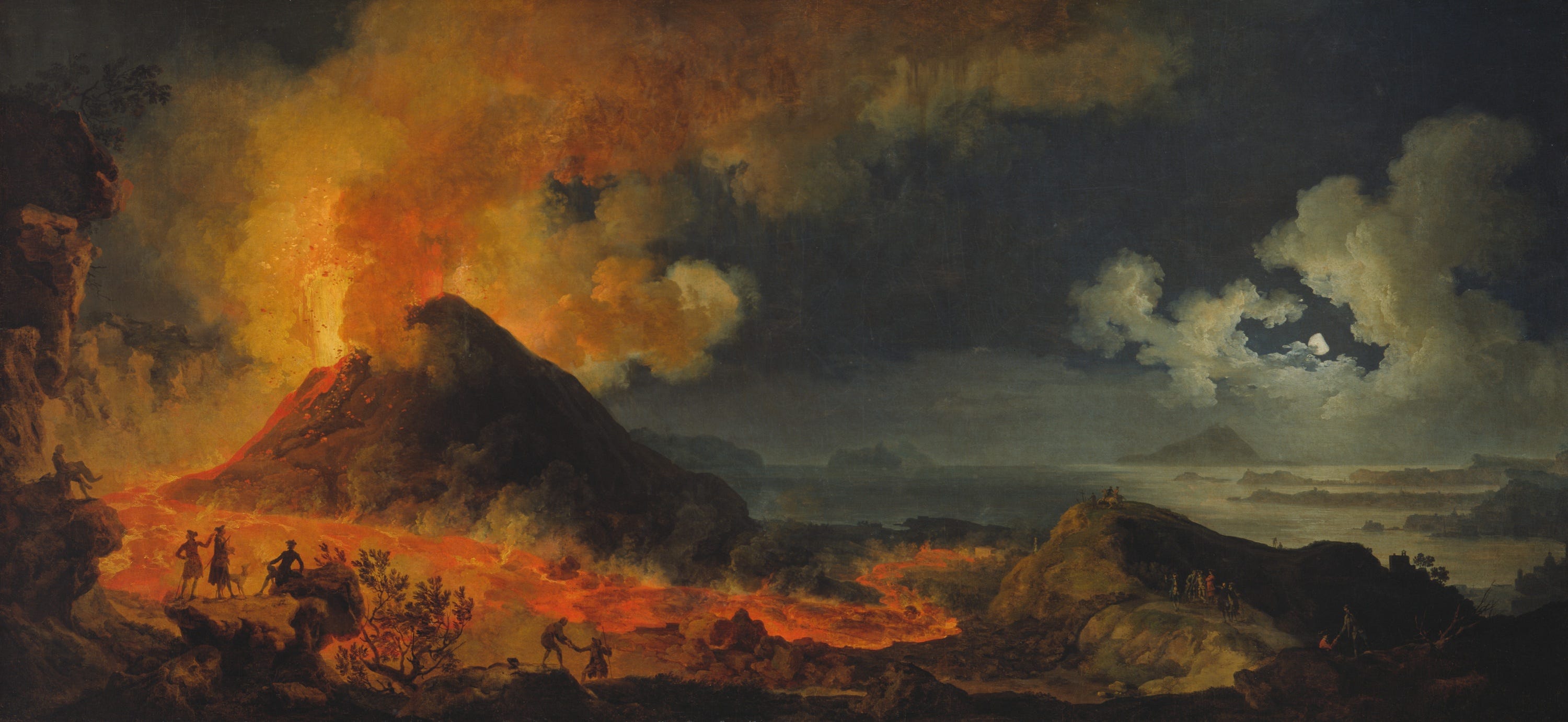
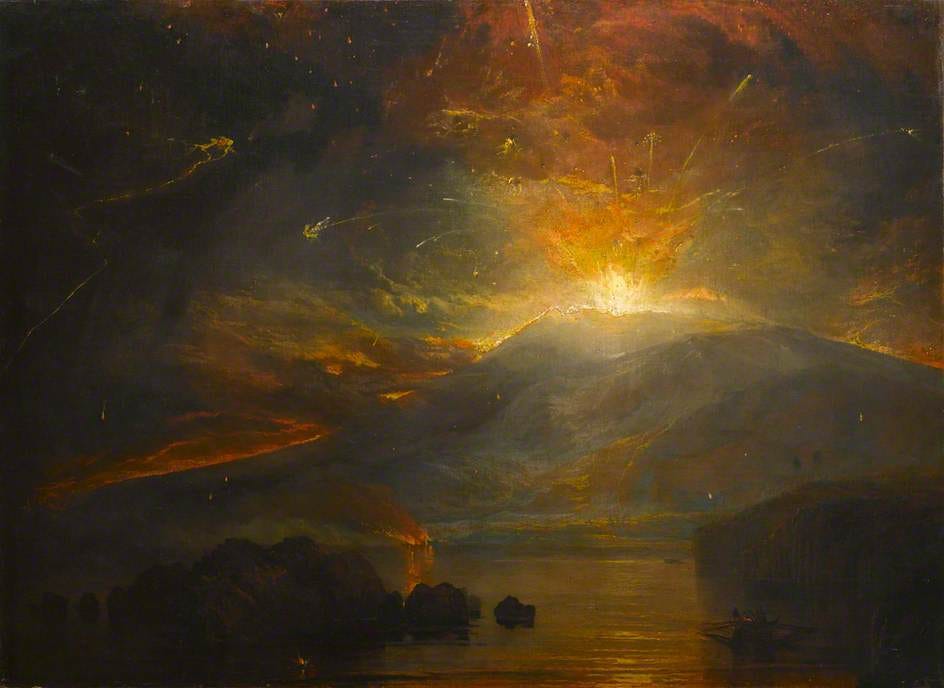
A volcanic eruption is a textbook cause of the aesthetic experience known as the sublime, defined by a sense of awe or even terror. About the sublime, Edmund Burke had written in 1757:
Whatever is fitted in any sort to excite the ideas of pain and danger, that is to say, whatever is in any sort terrible, or is conversant about terrible objects, or operates in a manner analogous to terror, is a source of the sublime; that is, it is productive of the strongest emotion which the mind is capable of feeling. [Part I, section 7]
[…]
The passion caused by the great and sublime in nature, when those causes operate most powerfully, is astonishment; and astonishment is that state of the soul, in which all its motions are suspended, with some degree of horror. [Part II, section 1]
And Immanuel Kant had written in 1790:
“Bold, overhanging, and, as it were, threatening rocks, thunderclouds piled up the vault of heaven, borne along with flashes and peals, volcanoes in all their violence of destruction, hurricanes leaving desolation in their track, the boundless ocean rising with rebellious force, the high waterfall of some mighty river, and the like, make our power of resistance of trifling moment in comparison with their might. But, provided our own position is secure, their aspect is all the more attractive for its fearfulness; and we readily call these objects sublime, because they raise the forces of the soul above the height of vulgar commonplace, and discover within us a power of resistance of quite another kind, which gives us courage to be able to measure ourselves against the seeming omnipotence of nature.”
When members of the Volcano School composed their paintings, they were able to contemplate the awe-inspiring power of the Hawaiian volcanoes, yet without placing themselves personally in immediate danger. They interpreted their experience of the Pacific islands from within a long-standing tradition in Western art.