Over a decade before French Impressionism received its name and fame, a similarly motivated group of painters in the 1860s went to paint in the countryside, in search of unspoiled nature.
They were humorously dubbed macchiaioli (“patch-makers,” “spotters” or “splatters”) due to their representation of spots (macchie, singular macchia) or patches of light.
In keeping with the mood of young Romantics, they were enthusiastic about Italian independence and unification.
An early work by a future macchiaiolo, Giovanni Fattori, depicts a battle in the Second Italian War of Independence:
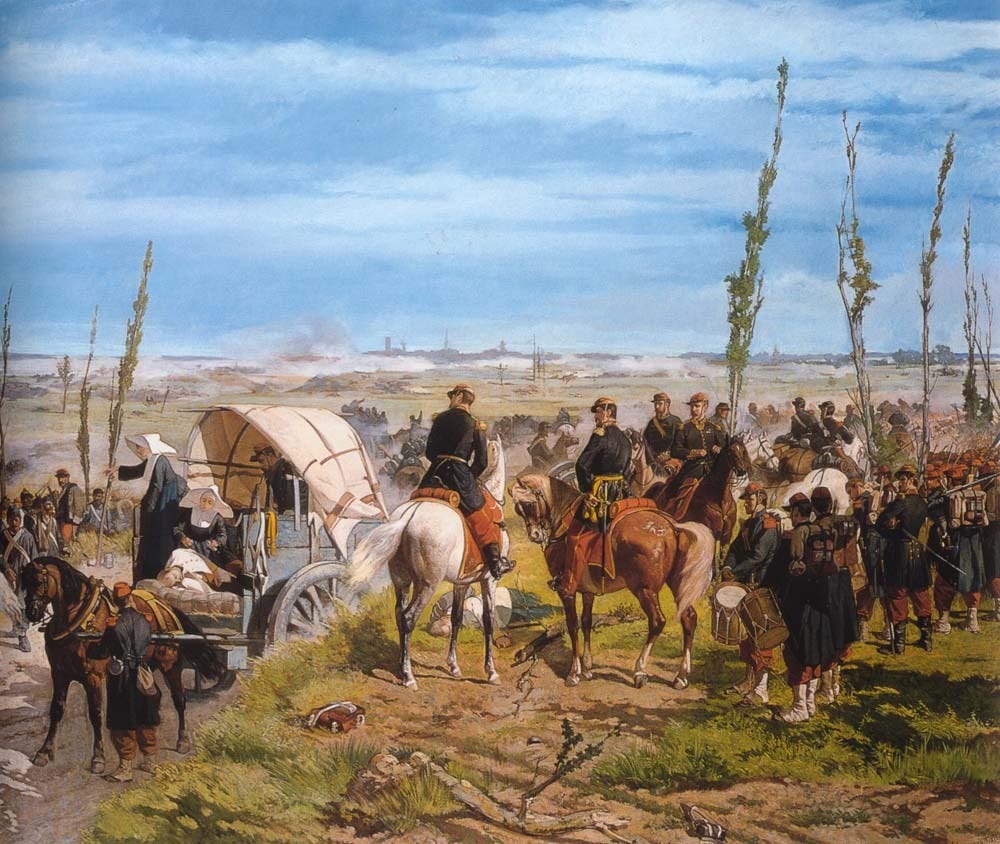
This is considered a pre-macchiaioli painting, since his style is still somewhat academic, but there are hints of the future movement.
Two of Fattori’s later paintings, Roman Carts and On Patrol (The White Wall), show how he moved in a more Impressionistic direction.


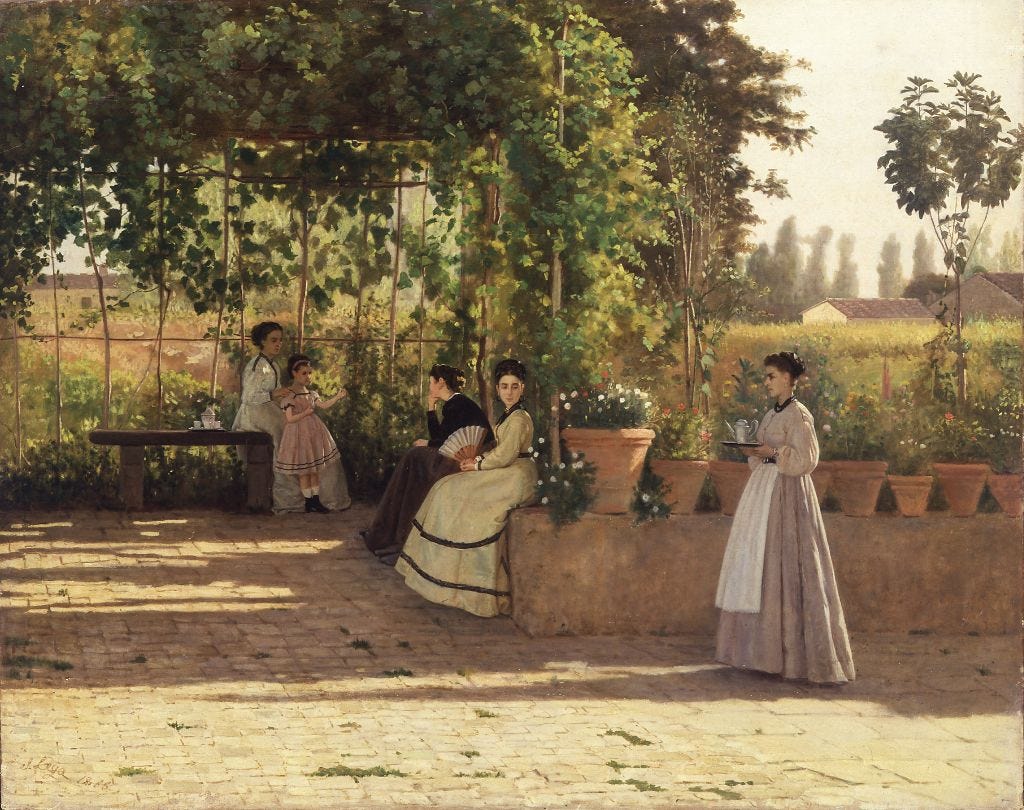
The Pergola (An Afternoon), by Silvestro Lega, shows how the painter treated the dramatic Italian afternoon light and shade.
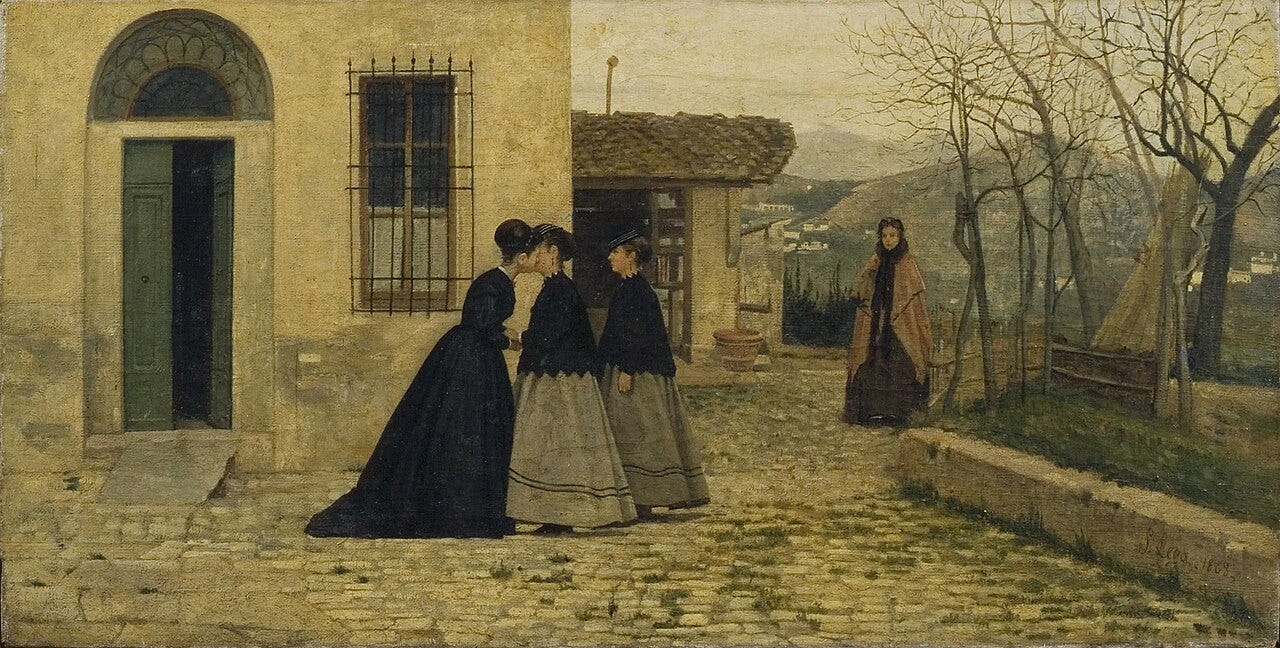
The weather is slightly more overcast for Lega’s The Visit (1868).
Telemaco Signorini’s painting of the Old Market in Florence is a more Bruegelish subject:
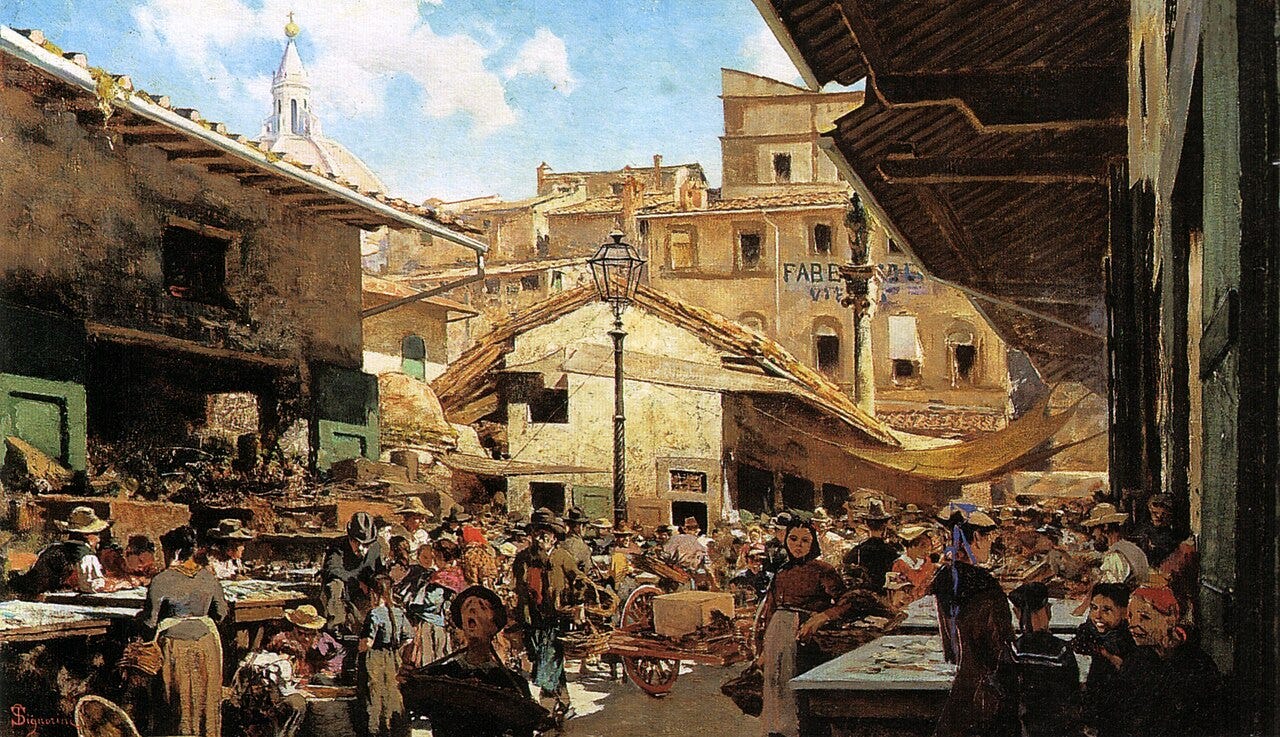
In Signorini’s painting, the force of the light and shadow seems to drown out the hubbub of the scenes he depicts. The Merciaio* of La Spezia, 1859
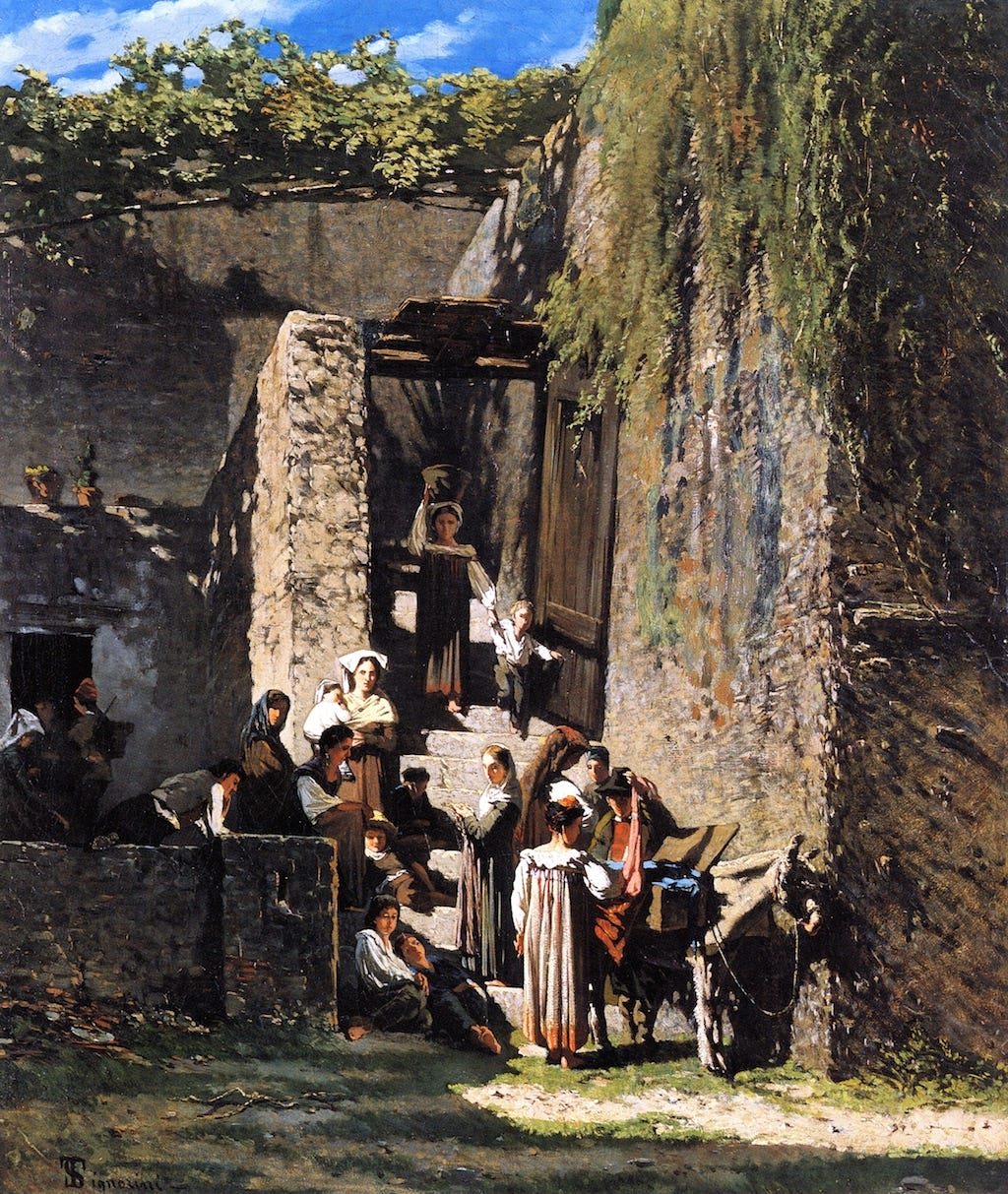
(Merciaio: Merchant, Haberdasher, Merchandiser, Mercer)
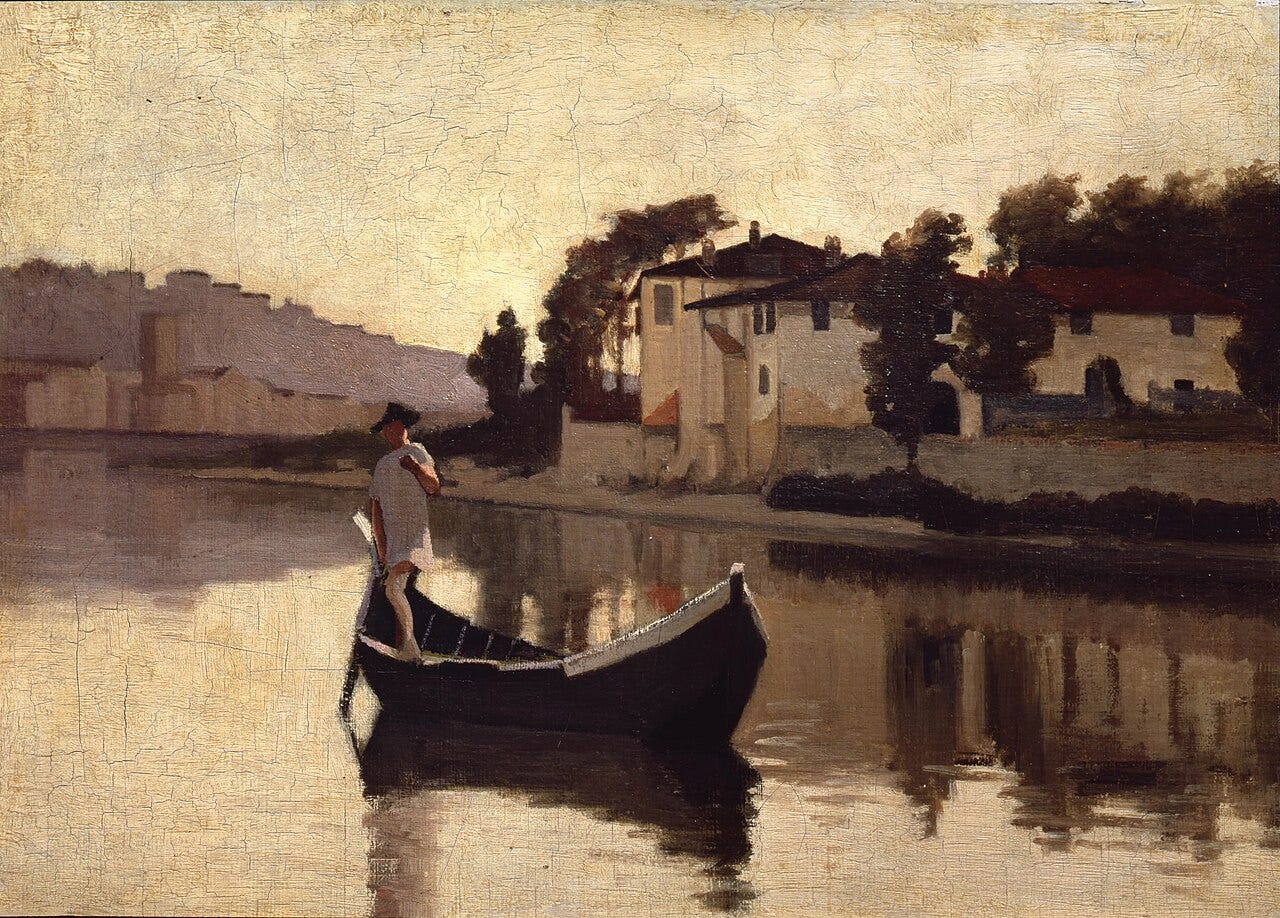
Giuseppe Abbati depicts a quieter country scene:
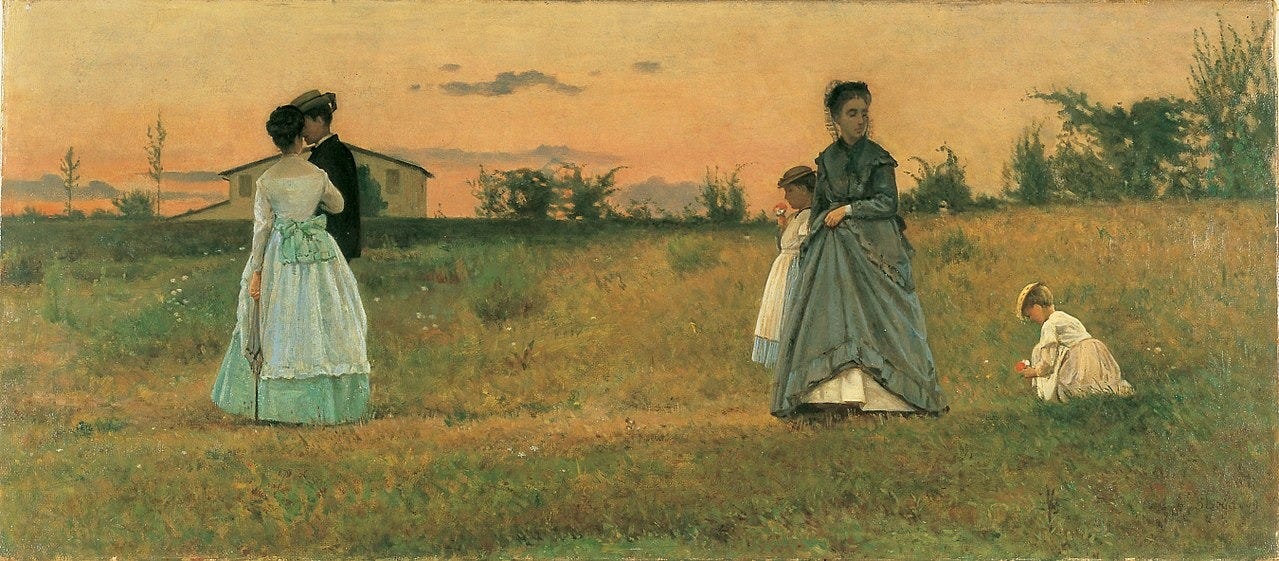
While their search for authenticity and simplicity was Romantic, their attention to ordinary details was Realist.
There are also some interesting contrasts between the Macchiaioli and the French Impressionists […]
The Macchiaioli were greatly admired by a number of Spanish artists.