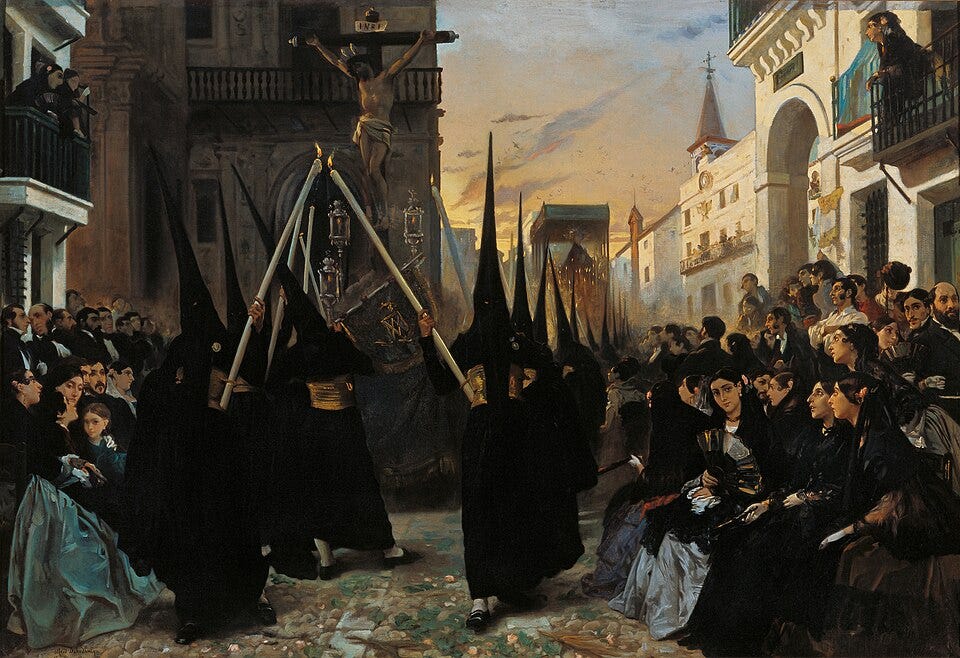
In the 19th century, Spain, and especially the southern region of Andalusia and its capital city of Seville, were fertile ground for a kind of painting called costumbrismo, which paid particular attention to local customs and traditions.
These paintings had titles such as El baile. Costumbres populares de la provincia de Soria [The Dance. Folk Traditions from the Province of Soria]. Many of them can be found in the Carmen Thyssen Museum in Málaga, Andalusia.
Costumbrismo has a Romantic aspect, in its attention to picturesque, authentic, expressive local and regional culture. But it also has a Realist aspect, in its attention to humble and ordinary parts of society.
Spain, and particularly southern Spain, would have been a good place to pursue this kind of painterly interest. A Mediterranean, Catholic culture had more to interest the costumbrists than a cold, northern, Protestant industrial city like Manchester, Rotterdam, or Hamburg.
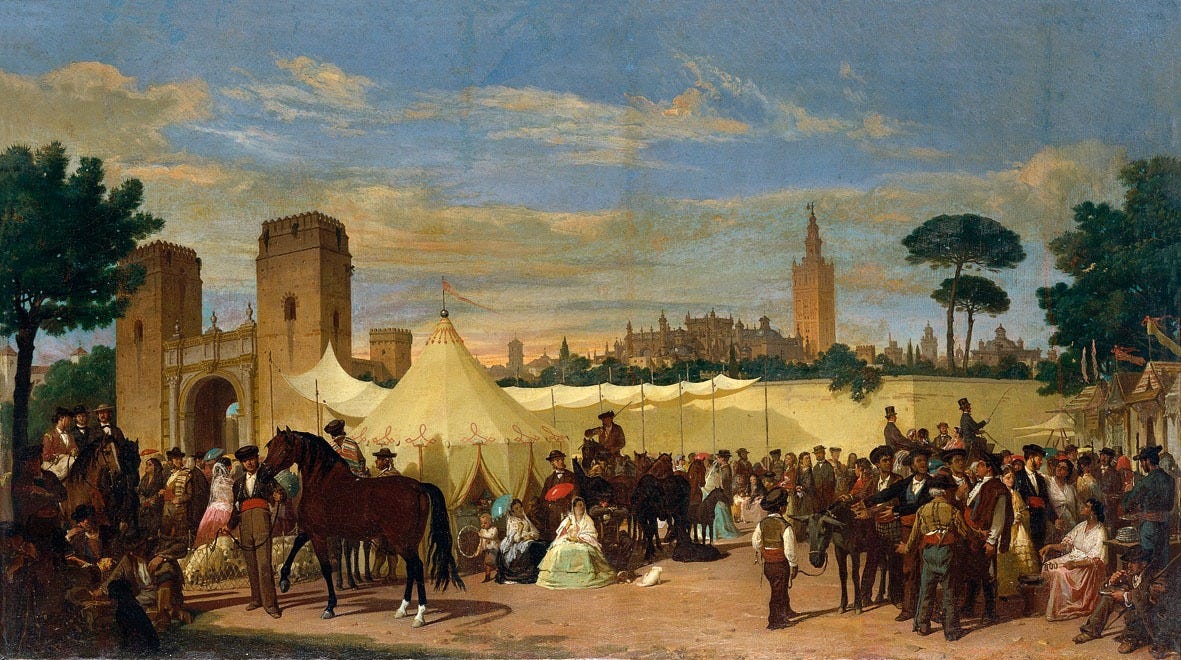
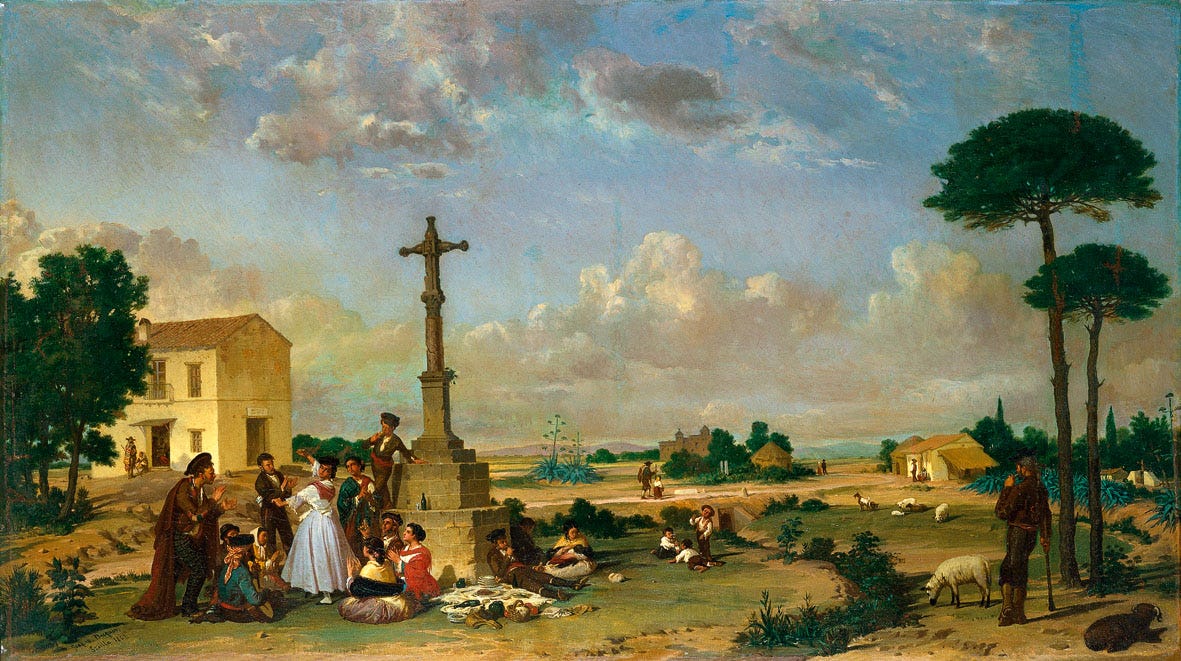
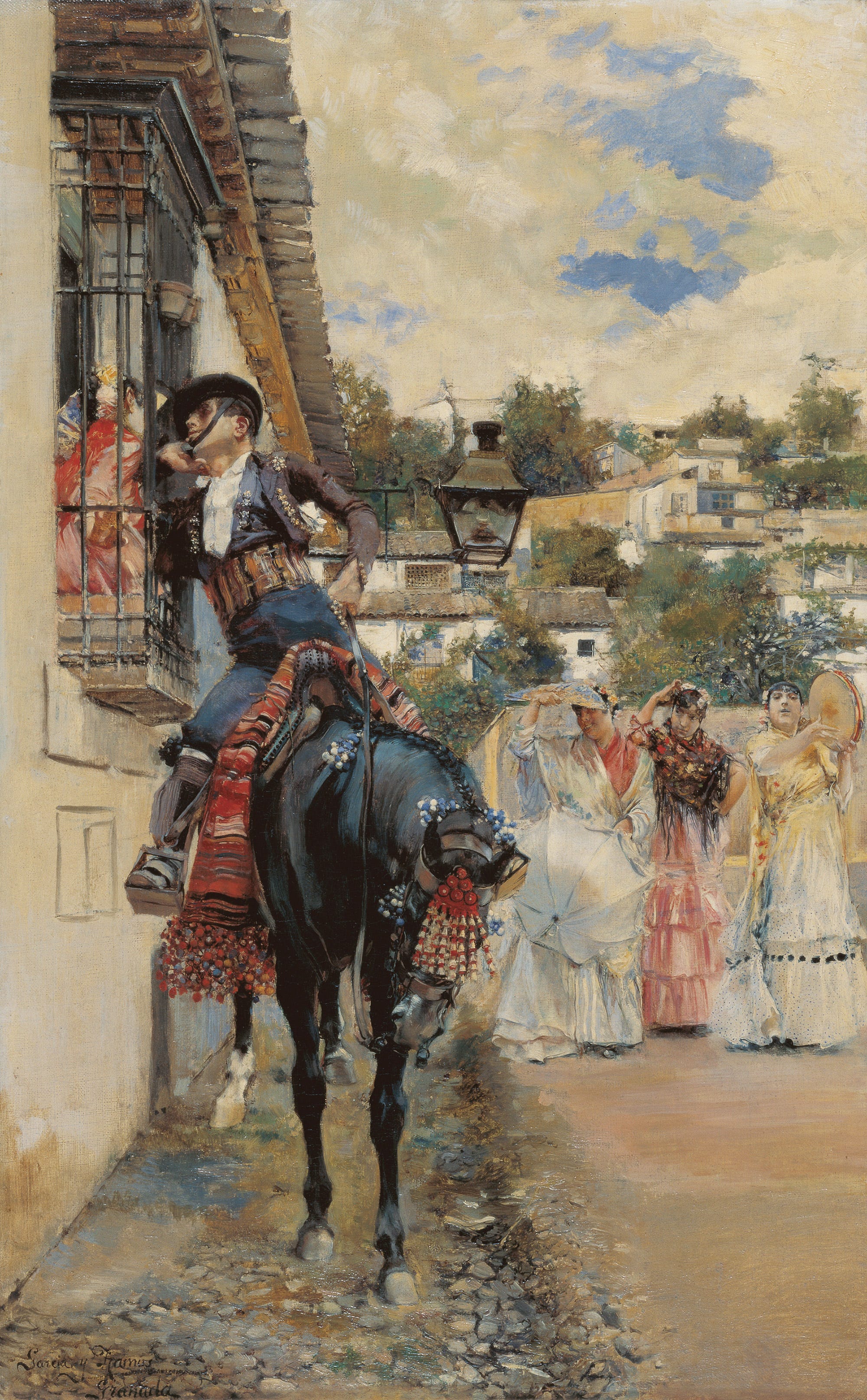
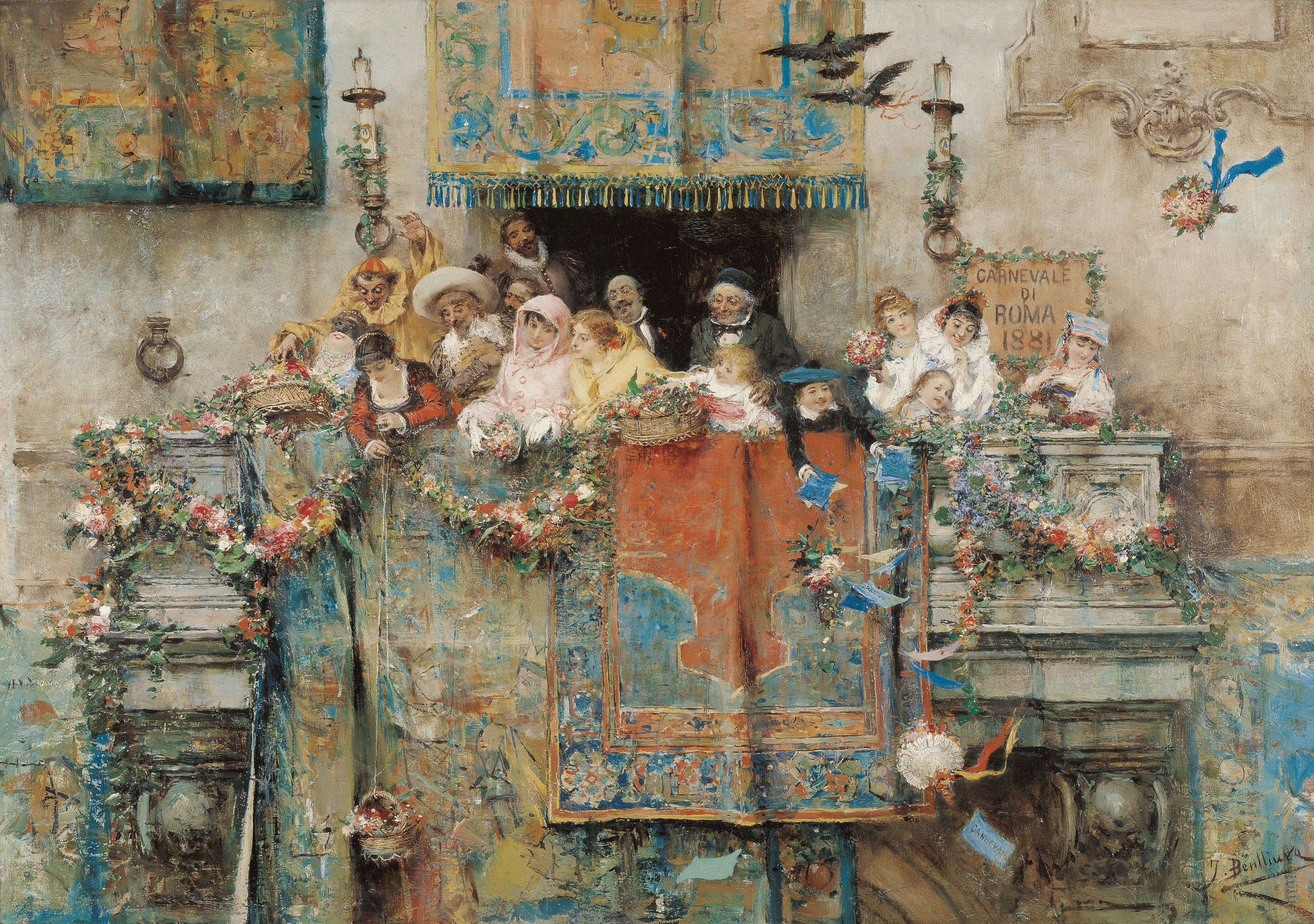
Costumbrismo could be pursued outside of Spain as well, for example, in Rome.
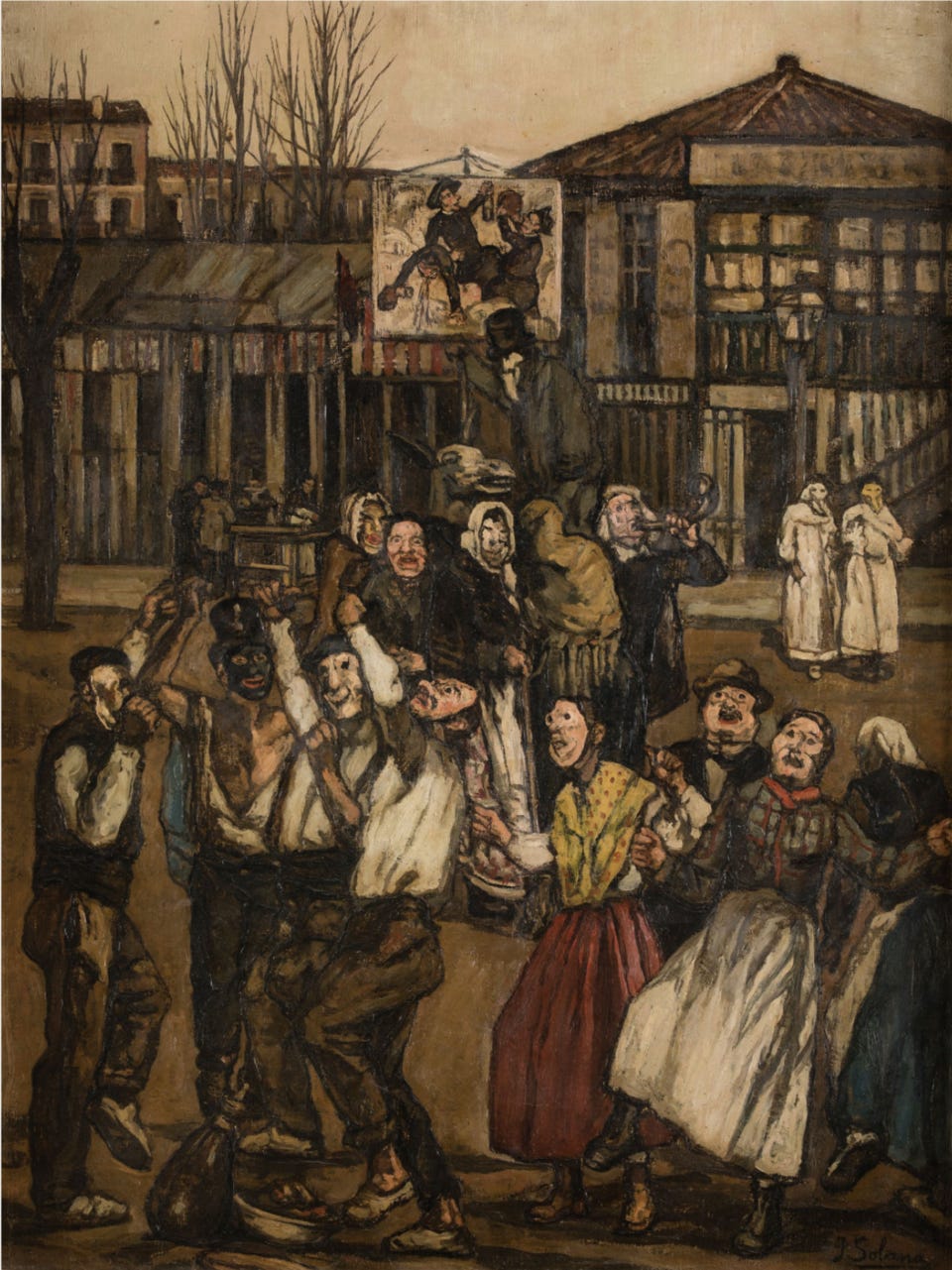
Into the 20th century, artists such as José Gutiérrez-Solana continued to make costumbristical paintings as well.
On the one hand, there is an ethnographic aspect to costumbrismo, as an outside observer renders such customs, costumes, traditions and rituals visible to an external public. On the other hand, there is also an imaginative, appealing or fantastical aspect to costumbrismo, as the lively and compelling scenes might entice a viewer into imagining one’s own participation in them.